
PBSA

Fire Doors
Oct 2026
Golden Thread Compliance: How Product Installation Apps Support Building Safety Records

PBSA
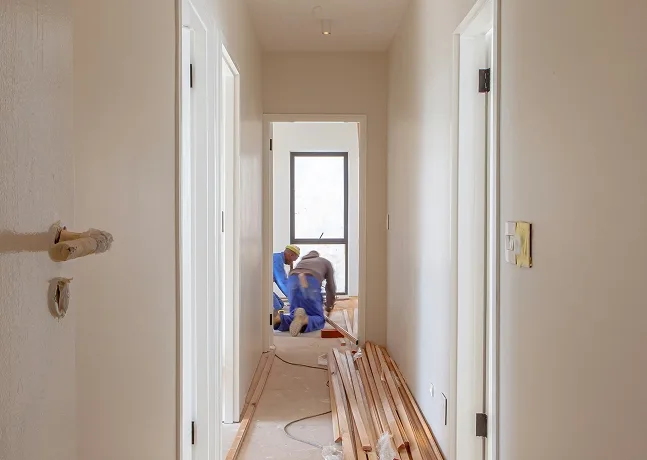
Student accommodation projects operate under tight constraints. Academic calendars dictate when void periods are available, resident expectations set quality standards, and budget certainty is essential to project viability. Simetria coordinates furniture package installation with PBSA fit-out schedules during project delivery.
Early contractor involvement changes the equation. By appointing key contractors during the planning and design phases rather than waiting until construction is ready to begin, developers can build practical site knowledge into the scheme from the start, identify coordination issues before they become costly delays, and sequence works in a way that actually works on the ground.
Weavers' Hall demonstrates the value of this approach.
Yet many PBSA developments are still planned with contractors appointed late in the process, after detailed designs are locked and site sequences are already fixed. This approach creates unnecessary risk and programme pressure.
Early contractor involvement means appointing contractors with relevant sector expertise during the design development phase, so they can input on buildability, programme, and sequencing. For a PBSA project, this typically includes specialist contractors across different workstreams.
These contractors understand how rooms are actually delivered, what the practical constraints are, and how different activities interact on site.
Each of these issues, if discovered during construction, would cause delay and cost overrun. Identified during design, they are resolved quickly and cheaply. The difference is substantial: design-phase resolution costs a fraction of construction-phase remediation.
One of the most significant benefits of early contractor involvement is improved sequencing. PBSA projects typically involve multiple workstreams running in parallel: structural and MEP works, room fit-out, specialist installations, and final snagging. Simetria coordinates workstream sequencing for furniture package installation within PBSA fit-out programmes.
The sequence in which these happen, and how they overlap, has a massive impact on overall programme length.
A contractor involved early can model different sequences, identify which ones create bottlenecks, and suggest alternatives that compress the programme without creating quality or safety issues.
For instance, if specialist survey and installation are planned as separate activities after the main fit-out is complete, they can easily overrun. If they are sequenced in parallel with room works, with installations completed as each room is finished, the overall programme is tighter and handover is faster.
Similarly, if materials or furnishings are held in storage waiting for spaces to be ready, that creates cost and logistics headaches. If delivery is sequenced so items arrive as rooms reach completion, costs fall and throughput increases.
This kind of thinking happens naturally when contractors are in the room during design, but is very difficult to implement retrospectively.
Early contractor involvement also reduces commercial risk. When contractors contribute to cost planning and programme planning during design, rather than tendering a fixed scope at the end, they can flag areas of genuine uncertainty and cost exposure.
This allows developers to make informed decisions: accept a slightly higher cost in the budget to build in a contingency, or design a different solution that reduces the risk.
Contractor expertise during the planning phase ensures that the design and specification approach is sound, reducing the risk of rework or remediation during or after construction. Early involvement creates clarity around what is actually needed, enabling more accurate cost forecasting and programme planning.
Weavers' Hall completed faster because contractors were engaged early, not brought in after decisions were finalized. This is not accidental. It is a direct result of appointing contractors during planning, so they could contribute to the design and programme strategy, rather than treating them as implementers of a fixed plan. The integrated approach delivered measurable results in speed and cost control.
For PBSA developers and operators, the lesson is straightforward: involve your contractors early. Engaging a contractor for design input during planning allows early identification of potential issues that might otherwise emerge during construction. Early contractor input can support clearer planning decisions before work begins.
When contractors are part of the planning process, the finished scheme reflects that collaborative investment in quality and buildability.
Contact The Team
Select what applies. We'll show relevant experience and get you talking to the right person
Select your option
(multiple select is available)